Retail Desk
Retail operationsView case study
A customer account, subscription service or system for your team’s daily work. I build applications around how your business works. We start with the most useful features and add more when you need them.
We’ll discuss your task, price and timeline. No obligation.
Latest activity
Project details received. The order is ready for approval.
Custom software is useful when several people, rules and systems need to work from the same information.
These are examples of what I can build for you. We can start with the essential features and expand the application as your business grows.
Customer accounts, plan changes, renewals and access limits. A successful payment can activate the service. Failed renewals can trigger a reminder or a support task. Staff can review payment and activation history in one place.
Separate accounts for sellers and buyers, product checks before publication, wholesale prices and order approvals. Commissions or payments to several sellers can be added if the payment service supports them. Each participant sees only the information they need.
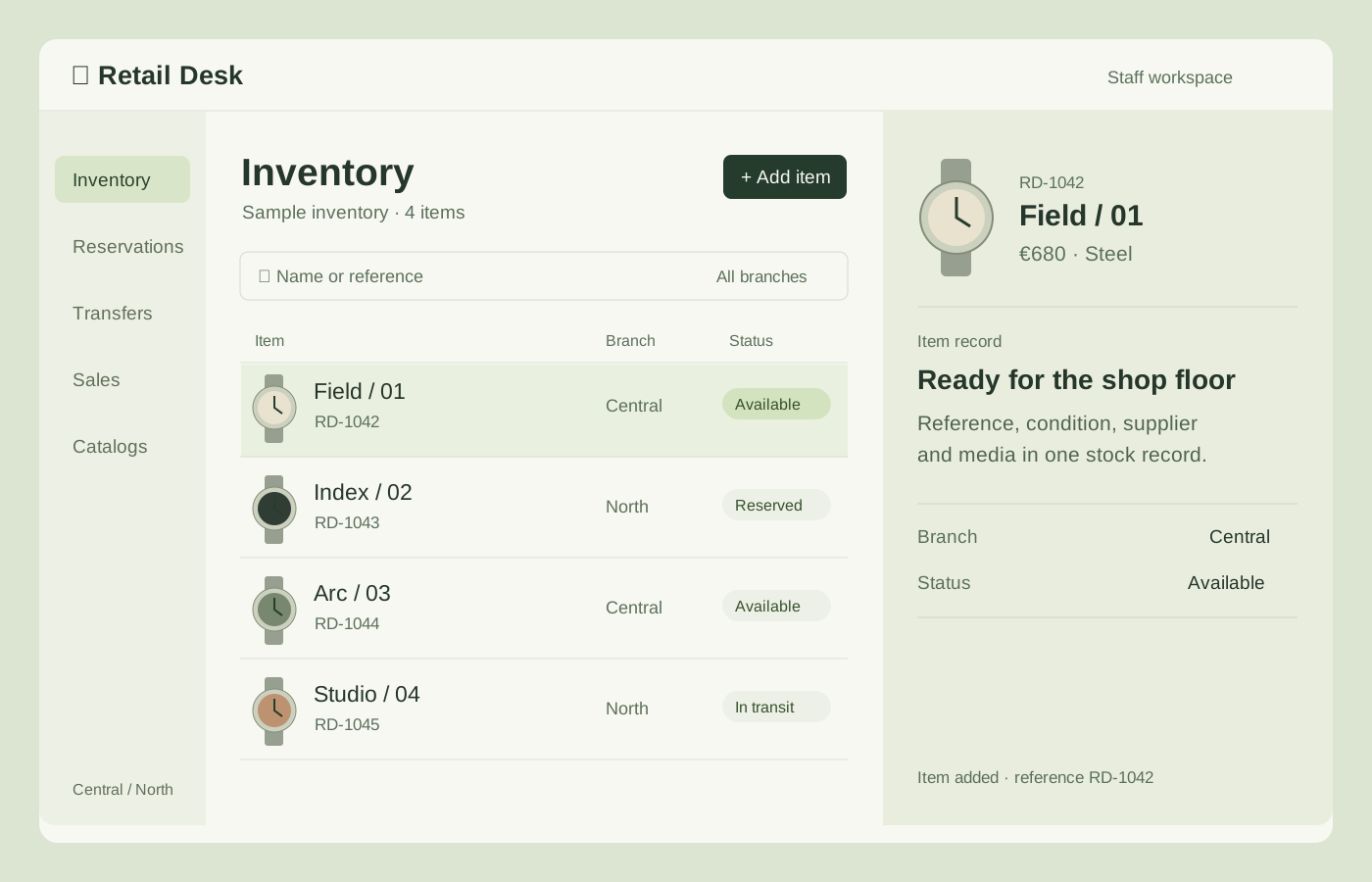
Shared stock across locations, reservations, transfers, approval steps and item history. Staff work from the same records, while customer catalogues show the relevant availability. Reports help check outstanding work and investigate changes.
Book appointments, equipment or spaces with working hours, capacity rules, deposits and cancellation policies. Add staff calendars, reminders and waiting lists. The system needs to handle competing bookings without promising the same slot twice.
Upload supplier catalogues, update prices and stock, and pass information between your services automatically. Your team can see progress and any errors, then continue unfinished work without starting over.
Upload documents, find the information you need and prepare draft replies. AI can help read files and find answers even when the wording differs. Your team can check the source and approve the result before using it. Access can be limited to the right people.
Customers and staff need the right access, payments should update orders, and information should stay up to date. I build these parts together.
A separate account for customers, staff and partners. We decide who can see information, make changes and approve work, then check those access limits.
Handle reservations, bookings and approvals using your business rules. Important changes have a history, and I check situations where two people try to reserve or change the same item.
Connect payments to orders or subscriptions, activate access and handle renewals. I check repeated payment notifications so they don’t accidentally create a second order or extend access twice.
Connect your existing tools, update product lists and prepare reports automatically. You can see the progress of longer tasks and find out if something needs attention.
The tools I use to build websites, applications and automation.
 React
 Python
 Next.js
 Django
 FastAPI
 TypeScript
 PostgreSQL
 Tailwind CSS
 OpenAI API
 Docker
 Redis
 Telegram Mini Apps
Supporting tools & integrations
 Django REST Framework
 Celery
 Linux
 Nginx
 Git
Stock management, paid subscriptions and product catalogues. Explore the completed projects. Where client details are private, the screens use sample data.
First working release
We agree the features of the first version before I give you a price. Further additions are quoted separately. Hosting, domain names and paid services are extra.
Estimated calendar days, including testing and launch. Time spent waiting for texts, images, access or your approval is extra.
An agreed first working version can often be ready in about 5-7 days. That is a focused release, with testing and launch included. A larger application gets a total estimate based on its workflows and integrations.
A free conversation about users, the current workflow and the result you need. Existing tools, code and examples help define the scope.
Agree user roles, screens, rules and integrations. Review the interface direction and fix the price and total timeline before development.
Try the application while I’m building it. Check the tasks your team and customers need to do, and share your feedback before launch.
I check access, payments, connected services and what happens when something goes wrong. Then I launch the application and check the main customer and staff tasks again.
You receive the code, accounts and instructions, plus three months of free support. Bug fixes do not use your two hours a month for small content changes. Further features are quoted separately.
Before starting, we agree who will use the application, what they can do and how we’ll check the result. Additional features get a separate price.
You see the interface and try the core workflow during development, with feedback collected before launch.
Customers, staff and partners see only what they’re allowed to see. I check both the actions they can take and the information that must stay private.
Your team can see important changes and failed tasks. We agree what the system can try again automatically and when it should ask for help.
Code, business data and service accounts are yours. The handover explains how the delivered system works and where later features can be added.
Client feedback and completed project history are open on my Freelancehunt profile.
Website availability checker · Python
The client highlighted on-time delivery, clear communication and a handover with code, tests and instructions.
Read the original feedback on FreelancehuntA few useful details before we start. Have another question? Let’s talk.
Discuss your projectYes. I can build services with different types of users, subscriptions, marketplaces, booking systems or tools for your team. Tell me who will use it and what they need to do. We’ll choose the essential features for the first version, then agree the price and deadline.
A first version with the essential features can often be ready in 5-7 calendar days, once the required access and materials are available. I estimate the full application after we agree its features. Small, familiar additions can take 1-2 days. Moving existing data or connecting unusual services needs a separate estimate.
Yes. I can finish or improve your existing website or application and connect it to other services. First, I’ll review what’s already there, what can be kept and what needs to change.
We agree which tasks customers and staff need on their phones, and adapt those screens. Small applications inside Telegram are also possible. Separate apps installed from the App Store or Google Play are quoted separately.
Yes. I’ve worked with Stripe and other payment services. Customers can pay for orders, renew subscriptions and receive access automatically. Available payment methods and payouts to different sellers depend on the chosen service and account.
You receive the code, business data, service accounts and instructions. Hosting and paid services remain separate running costs. You can keep working with me or choose another developer.